

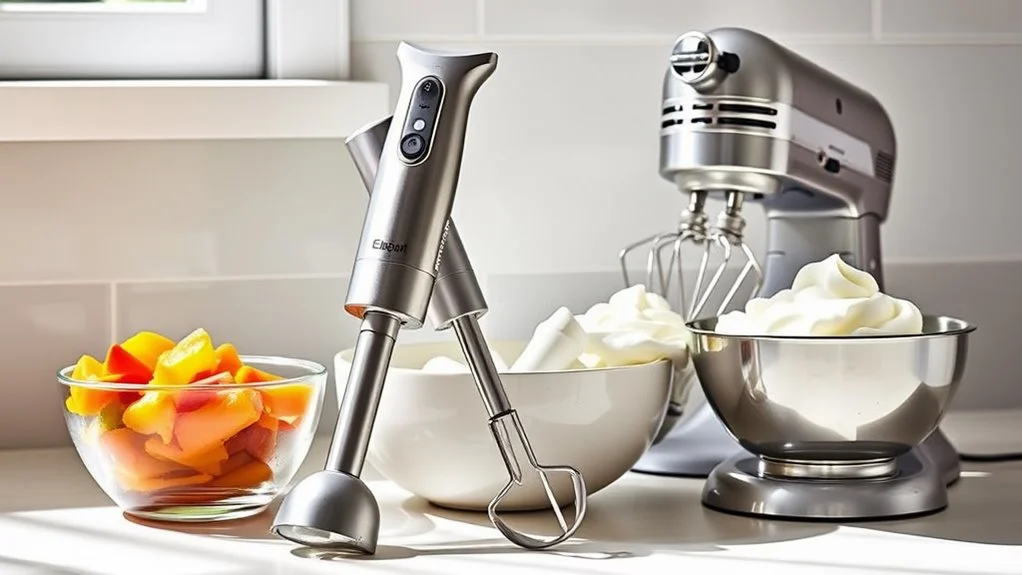
When it comes to blending, every kitchen has its preference. Some lean towards the sturdy, steady and powerful countertop blender, while others seek the convenience of the sleek hand blender. Both have their unique strengths, and choosing between them depends on your cooking habits, kitchen space, and lifestyle. Whether you’re whipping up a smoothie, pureeing soup, or making dips and sauces, the right blender can make all the difference in your daily culinary routine.
Let’s explore how these two popular kitchen appliances compare and which one might be the perfect fit for your kitchen style.
Breaking Down the Differences: Countertop Blender vs Hand Blender
Before deciding which appliance deserves a spot in your kitchen, it’s important to understand how a countertop blender and a hand blender differ in function, design, and convenience. Each brings its own strengths to the table, offering different levels of power and performance. Let’s dive into the key factors that set them apart and help you find the perfect match for your kitchen style.
Power and Performance
A countertop blender is known for its high-power motor and ability to handle tough ingredients. From crushing ice and grinding nuts to making smoothies and soups, it delivers consistent, smooth textures every time. Its multiple speed options and preset modes give you full control over blending intensity, making it ideal for those who love experimenting with h recipes.
On the other hand, a hand blender shines in smaller, quicker tasks. It’s perfect for pureeing soups right in the pot, whipping cream, or blending small portions without transferring ingredients. While it may not match the sheer power of a countertop blender, its efficiency in handling light to medium tasks makes it a versatile choice for everyday cooking.
Ease of Use and Convenience
If simplicity is what you’re after, a hand blender is unbeatable. Lightweight, compact, and easy to operate, it fits perfectly into busy kitchens where time and space are precious. You can blend, whisk, or puree directly in your cooking vessel, so there’s no need for multiple containers or cleaning hassles.
A countertop blender, on the other hand, while slightly bulkier, offers convenience in a different way. Once you load the ingredients and press start, it takes care of the rest. It’s especially helpful for batch preparation, large families, or anyone who enjoys making smoothies, shakes, or soups in bigger quantities.
Design and Storage
Your appliance should complement your kitchen aesthetic setup. A countertop blender often becomes a statement piece. It is sleek, modern, and designed to sit proudly on your kitchen counter. It adds a professional touch to your cooking space and is always ready for use. In contrast, a hand blender is all about minimalism and flexibility. Its slim design allows it to be tucked away easily in a drawer or cabinet when not in use. For smaller kitchens or those who prefer a clutter-free countertop, this can be a real advantage.
Versatility in Functionality
A countertop blender is your go-to for heavy-duty tasks. It can crush ice, blend frozen fruits, and make creamy nut butters or thick smoothies. Its large jar capacity makes it ideal for preparing drinks or sauces for a group, ensuring consistent texture with every blend. Meanwhile, a hand blender is perfect for in-pot blending and on-the-go versatility. It’s excellent for soups, sauces, and even baby food. Many hand blenders come with attachments like a whisk or mini chopper, expanding their usefulness beyond basic blending. If you enjoy quick prep without too much setup, this tool is a winner.
Cleaning and Maintenance
No one enjoys post-cooking cleanup, and this is where hand blenders often score higher. Their detachable blades and minimal parts make them incredibly easy to wash and store. You can clean them in seconds with just a quick rinse under running water or by gently wiping with a damp cloth. A countertop blender requires a bit more effort due to its larger jar and blade assembly. However, most modern designs include self-cleaning features or dishwasher-safe parts, which make maintenance far simpler than before. It’s a fair trade-off for the power and capacity it offers.
Price and Budget Considerations
When it comes to affordability, hand blenders generally come at a lower price point, making them accessible for everyday users or those just starting out. They’re a cost-effective way to achieve great results for light tasks without taking up much space. Counter-top blenders, on the other hand, are often seen as a long-term investment. With their durable build, advanced features, and higher performance, they justify their price for those who blend regularly or require more versatility in the kitchen.
Which One is Perfect For Your Kitchen?
If you love cooking in large batches, experimenting with smoothies, or prefer robust appliances that can handle tough ingredients, a countertop blender is the perfect match for your kitchen style. It’s ideal for families, health enthusiasts, or anyone who enjoys full-fledged meal prep. If you’re more of a practical, quick-cooking home chef who values portability, convenience, and minimal cleanup, a hand blender will fit seamlessly into your routine. It’s compact yet powerful enough for your daily blending needs.
Both countertop blenders and hand blenders have their own charm and functionality. The choice ultimately depends on your kitchen space, cooking frequency, and the kind of recipes you love to create. Whether you prefer the power of a countertop blender or the simplicity of a hand blender, the right choice can elevate your cooking experience and make every blend a breeze.
