

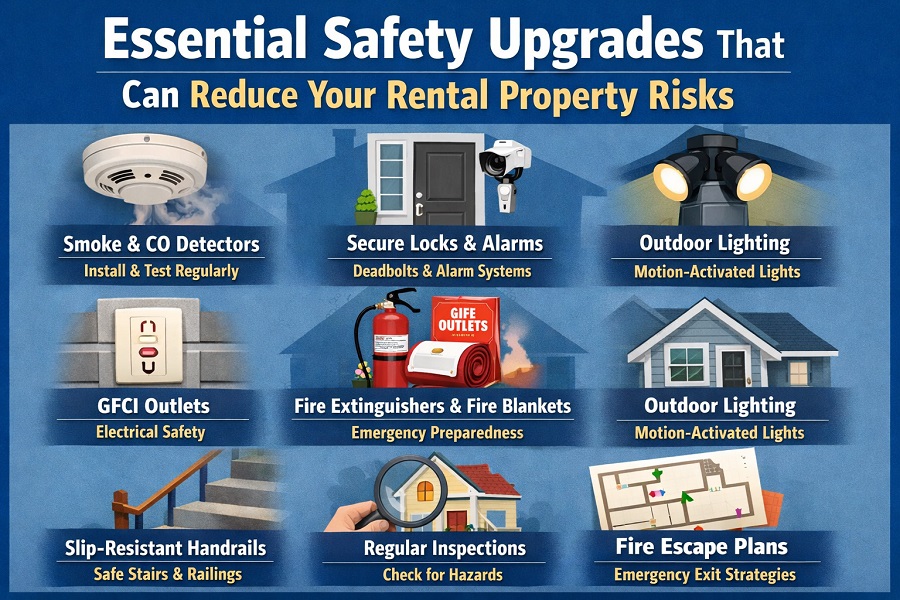
Most hosts consider safety in the context of meeting the standards – having smoke detectors because they must be installed, keeping a fire extinguisher because the platform indicates it. However, perceiving this issue in such a way is not effective. Each potential danger in your rental property poses a real risk to your revenue, your accountability, and your business continuity.
It’s better to view safety improvements as part of capital investment rather than just obligatory steps.
Start With Detection, Not Just Prevention
Interconnected smoke and CO detectors represent the best safety return on investment available. Working smoke alarms reduce the risk of dying in a home fire by 55% (National Fire Protection Association). But it’s particularly important that your alarms be “interconnected” in a rental situation: when a basement alarm goes off, you need every unit on every floor to start evacuating immediately. No one visiting your property knows it as well as you. They need every second they can get.
Carbon monoxide detectors should be a fixture in any home with gas appliances, a furnace, or an attached garage. CO is odorless, so guests have no other warning that it’s building up. Put yours at sleeping level, not high on the wall. This is the kind of specific, defensible decision that could really help you out if you ever face a premises liability suit.
Document the location of every installed detector, the brand and model you used, and how recently battery changes were made. Just write it down somewhere with a date.
Platform Protection Isn’t The Same As Insurance
Damage protection and liability coverage come in various forms as part of the host programs that most popular hosting platforms provide. While these can provide some measure of security they are not a replacement for your own policy. Platform-provided protections come with their own set of exclusions, claim limits and dispute process over which you have no control. Commercial liability is usually not covered in the way a standalone policy can cover you and the risk of personal property as a host also not covered.
A dedicated airbnb hosting insurance policy is structured specifically for short-term rental operations – covering commercial premises liability, property damage from guests, and loss of rental income when a covered event makes the property uninhabitable. That combination of coverage is what platform protection doesn’t reliably replicate.
Do A Lighting Audit Before Your Next Guest Checks In
Slip-and-fall incidents resulting in claims are the highest single liability source for hosts. Nearly all occur on stairs, at entryways, or on exterior paths – locations that are observable in the daylight and unseen in the middle of the night. Motion-activated LEDs along every exterior walkway, above every stair landing, and in the garage entry are a simple solution that most hosts never implement.
Take a walk around your property after dark. You’ll find at least two issues you never realized existed.
Rugs at the base of stairs and in bathrooms are another easy high-return item to replace with non-slip alternatives. An $80 fix that eliminates a real liability exposure.
High-Tech Prevention Tools Hosts Underuse
While smart locks are essentially commodity items now, with the vast majority of hosts having installed them for reasons of convenience versus security, it’s really the access log that is valuable from a risk management perspective. A guest claims they were ever locked out or someone enters during a window when the property was empty, and you have a timestamped record. That access is evidence.
Noise sensors – devices that detect decibel levels without recording audio – let you identify a potential unauthorized party before it becomes property damage. Responding to an alert at 11pm is manageable. Responding to a damage claim after checkout is not. These devices comply with platform privacy policies because they don’t record conversations, just ambient sound levels.
Water leak sensors under sinks, behind toilets, and near your water heater cost under $30 each and can prevent claims that run into the tens of thousands. A burst pipe while the property is occupied is a loss-of-use event – your rental income stops until repairs are finished. The sensor doesn’t prevent pipes from aging, but it gets you to the problem before it floods two floors.
Maintenance Schedules Aren’t Glamorous But They Matter Enormously
Heating, ventilation, and air conditioning systems and water heaters are not only the most common sources of fire risk in rental properties but also the top two culprits of catastrophic water damage. A service contract that has annual inspections isn’t an expense – it’s excellent documentation that you maintained the property. If a claim ever goes to dispute, that paper trail shows duty of care in a way no after-the-fact explanation ever could.
The same is true of your House Manual. List every safety feature by location. Include emergency exit routes with a simple diagram. Also, note the nearest urgent care facility. This isn’t hospitality branding. It’s a legal record showing that a reasonable host took reasonable precautions.
Connecting Physical Safety To Financial Protection
All of these improvements need to be made at the same time. A leak sensor won’t replace insurance, insurance won’t replace proper lighting, and so on. What you’re trying to do is build a multi-level protection system, where with each piece the chance of something bad happening decreases, and the financial loss if it does happen is minimized. This isn’t caution – this is simply how a proper rental operation works.
